From Analysis to Action: How Six Sigma Roadmaps Structure Improvement Projects
Statistical methods can produce valuable insights, but the real challenge often comes next: Which tool should be used, and how should the result influence the next project decision?
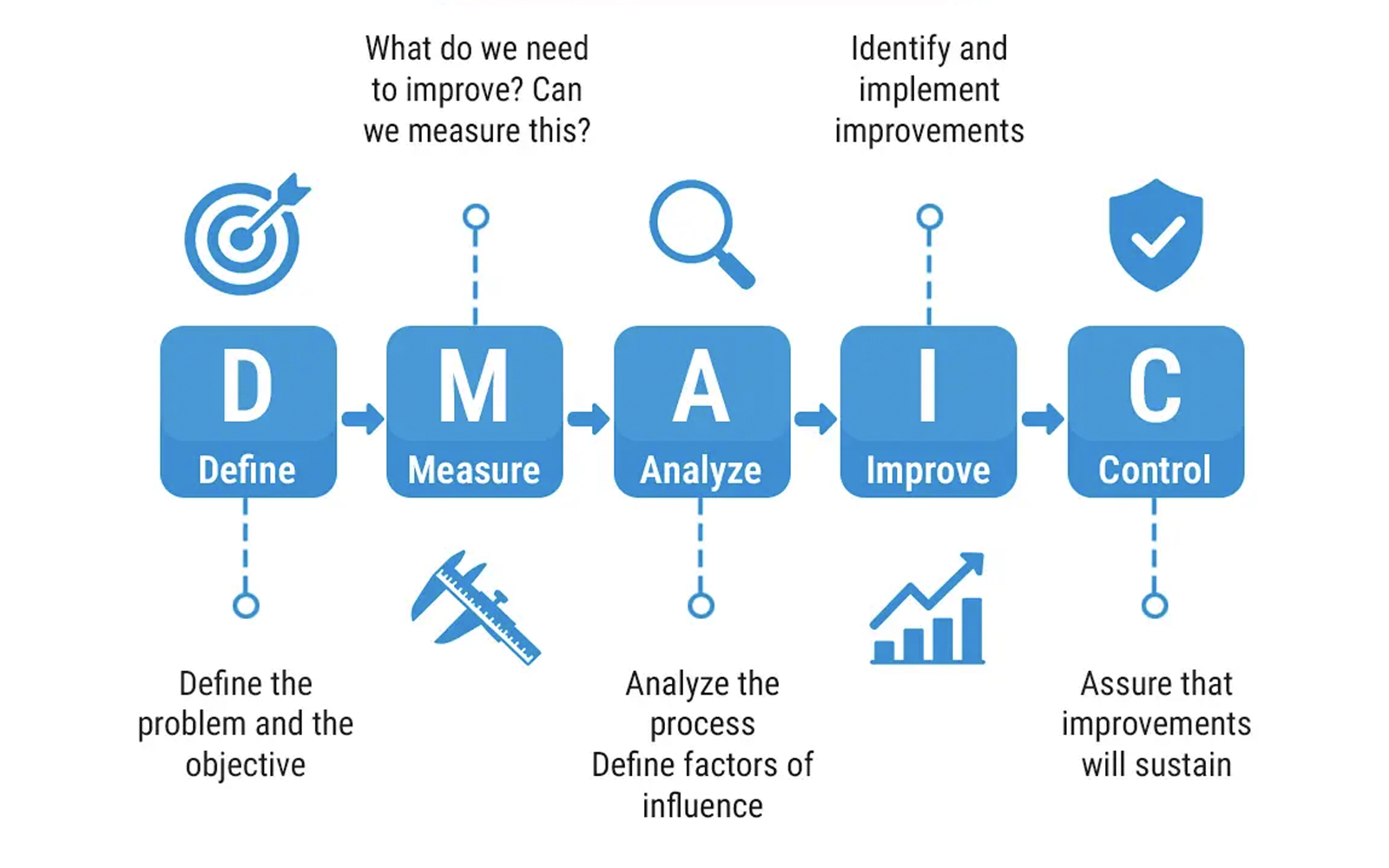
Structured Six Sigma roadmaps provide this orientation. They guide teams through DMAIC and connect statistical analysis with a clear improvement process.
Guidance throughout a Six Sigma project
In our Green Belt and Black Belt training programmes, roadmaps are more than training material. They also serve as practical references when participants later work on real improvement projects.
They help answer questions such as:
- Which statistical method fits the problem?
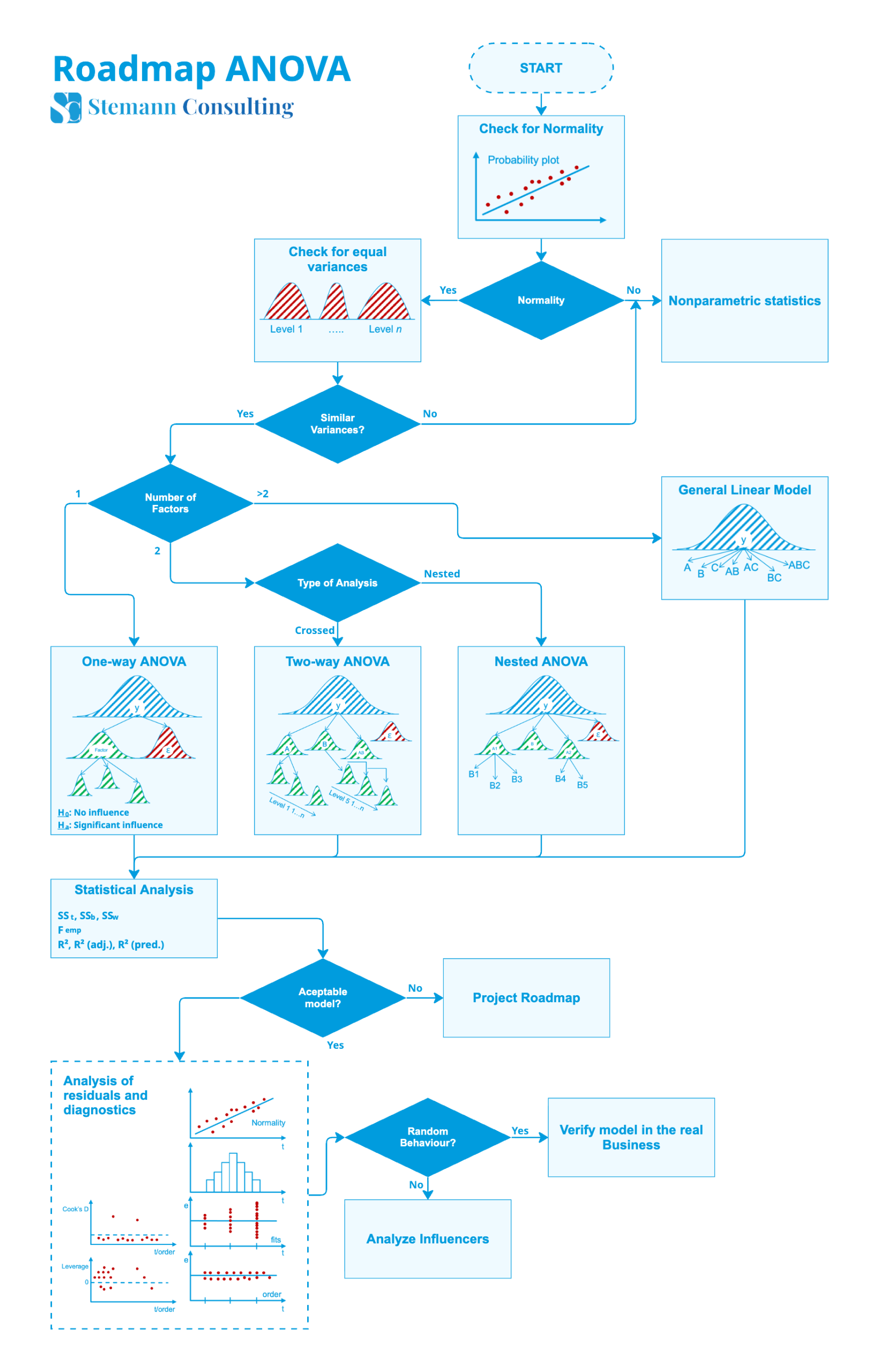
- Are the assumptions for ANOVA, regression or another test fulfilled?
- Which results matter for the next decision?
- What is the appropriate next step in DMAIC?
This turns individual tools into a coherent project methodology.
Choosing the right method
Selecting the appropriate method is one of the most common difficulties in Six Sigma projects. Roadmaps provide structured decision paths that make this process easier.
They help teams:
- select statistical methods more systematically
- reduce the risk of misinterpretation
- prepare analyses more efficiently
- translate findings into concrete improvement actions
For complex projects, this structure also improves consistency and collaboration across the team.
Structure instead of a toolbox
Six Sigma is not about using as many statistical techniques as possible. The objective is to apply the right method to the right question and turn reliable evidence into better decisions.
Our roadmaps support this process during training, in improvement projects and as a practical reference for Green Belts and Black Belts